Workforce Impact Assessment Framework

NIIMBL is developing an impact assessment framework
for education and workforce development (EWD)
programs and initiatives to standardize how the
biopharmaceutical community can:

  • Evaluate feasibility of proposed initiatives and programs
  • Maximize and communicate the impact of existing workforce initiatives
  • Facilitate program benchmarking and comparison through standardized metrics

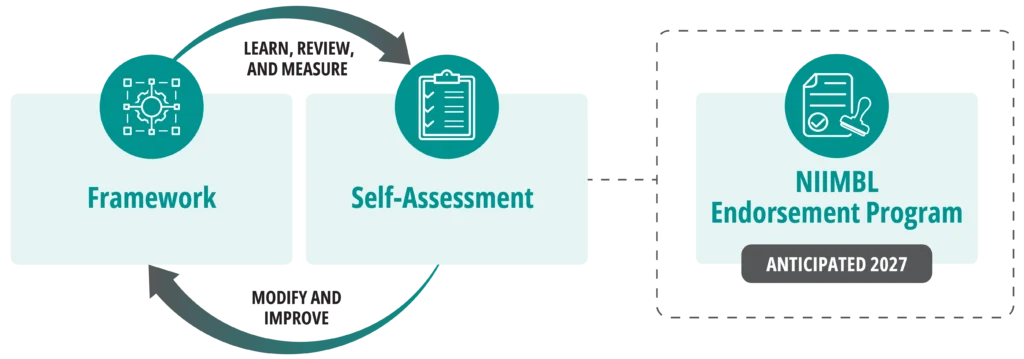
NIIMBL expects to roll out the framework and an accompanying online self-assessment tool by the end of 2025.

Ultimately, the framework will serve as the foundation from which NIIMBL will develop principles and a rubric for endorsing workforce programs and initiatives that are aligned with the specific needs of the biopharmaceutical manufacturing industry.

Framework Purpose

Current State

  • EWD initiatives cannot be holistically evaluated or assessed for impact
  • Securing funding, advancing innovative ideas, and effectively demonstrating return on investment (ROI) is challenging
  • Emerging biopharmaceutical manufacturing regions lack the necessary knowledge, best practices, and information for designing an impactful initiative

Impact Assessment Framework

  • Establishes a standard, consistent approach for assessing impact across key audiences
  • Guides the successful development, implementation, and tracking of workforce initiatives
  • Framework-informed initiatives can become a model for emerging organizations

Future State

  • Consistency: Ecosystem-wide agreement on process and components of effective workforce initiatives
  • Effectiveness: Industry needs are met by better designed and implemented initiatives
  • Efficiency: Increased opportunities to more effectively leverage and build on best practices and proven approaches to developing workforce initiatives

Structure of the Framework

Impact Assessment Framework
The framework can be used to assess different types of workforce initiatives:
  1. Community Outreach and Awareness: Initiatives focused on creating interest in and understanding of biomanufacturing career opportunities
  2. Non-Degree Training and Programs: Training and professional development opportunities designed to recruit new workers and upskill current workers
  3. Industry-Aligned Degree Programs: Post-secondary education that builds specialized knowledge and expertise in biomanufacturing

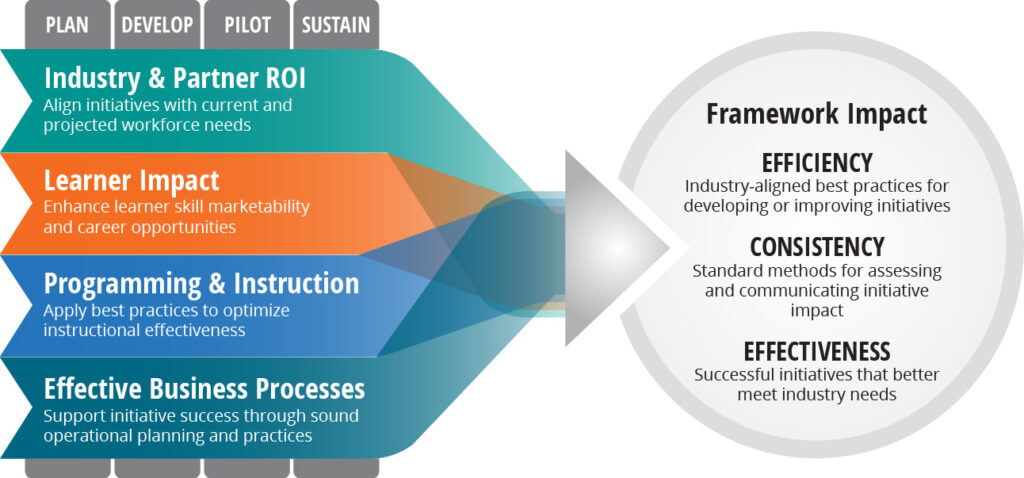
For each initiative type, the framework outlines key activities needed to plan and implement an impactful workforce initiative across four distinct development phases (plan, develop, pilot, sustain) and by four foundational dimensions of impact (industry and partner return on investment, learner impact, programming and instruction, effective business processes).

Who Should Use the Framework?

Industry

Small, medium, or large biopharmaceutical manufacturers and suppliers

Benefits:

  • Ensure industry needs are addressed by education and training initiative development
  • Identify effective and impactful training initiatives
  • Identify new sources of talent for scientific and technical roles
  • Inform partnerships with educators, instructors, and funders to champion initiatives

Training Providers

Training centers, community colleges, universities

Benefits:

  • Develop initiatives that are grounded in industry needs and designed with impact and job placement and/or advancement in mind
  • Ensure regional initiatives are aligned with national and industry best practices and standards
  • Achieve industry-wide recognition of initiative value

Economic Development Organizations

Local, state, or federal governments; non-profits and community organizations; regional economic development organizations

Benefits:

  • Effectively manage portfolios of workforce initiatives
  • Understand industry and provider capabilities and strengths
  • Identify and celebrate high-performing workforce development initiatives
  • Evaluate regional workforce readiness and infrastructure

How to Use the Framework

Initiative planning and scaling
Use the framework as a roadmap to help you plan, develop, pilot, and sustain workforce initiatives using best practices and recommended measures of success

Portfolio management and reviews
Use the framework as a foundation to better evaluate strengths, weaknesses, and impact provided by specific workforce initiatives and ensure they are aligned with best practices

Improved reporting and benchmarking
Improve reporting on your initiative’s value by aligning terminology, best practices, and measures of success with national standards

RFx development and evaluation
Communicate expectations and requirements more effectively to the entire ecosystem with respect to proposals and/or grants

Effective partnering
Build a shared understanding of industry, community, and learner needs enabling you to form, foster, and strengthen industry partnership

Get Involved

To learn more about the NIIMBL Workforce Assessment Framework, contact NIIMBL Workforce Director, John Balchunas